
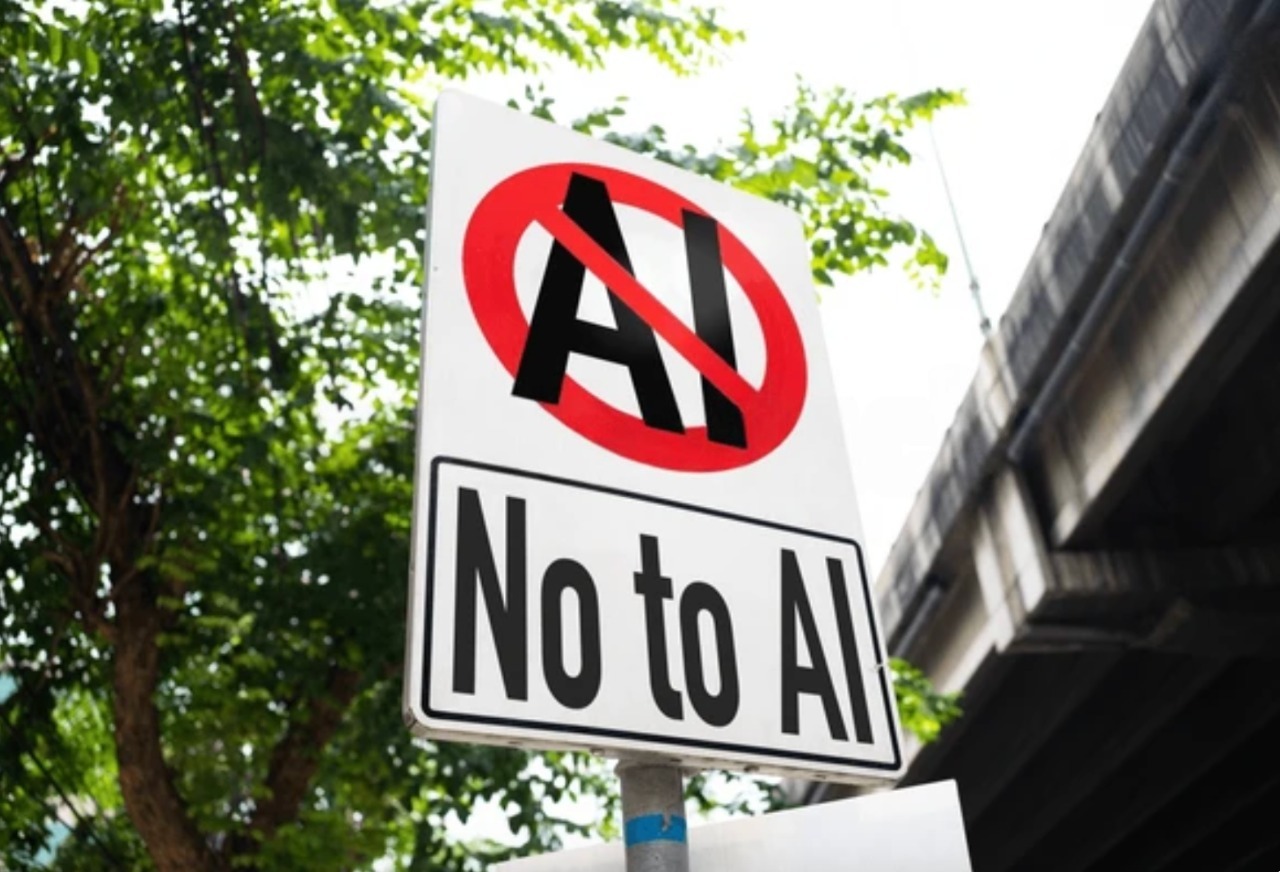
Key takeaways: Data center opposition combines two historically difficult forms of resistance — the ideological, hard-to-defuse opposition of oil pipelines, and the localized NIMBY opposition of transmission lines and incinerators. The closest historical parallel is nuclear power: both face simultaneous ideological and local opposition. Unlike nuclear, data centers are also uniquely non-transparent and privately funded — a combination that maximizes community distrust. The historical record suggests community acceptance can follow construction, but the path there is harder than it was for any prior U.S. infrastructure transition.
We're in the middle of a land war over data centers. Developers and hyperscalers are rushing to acquire land and permitting to build the compute power necessary for AI. County councils are passing moratoriums to buy time to learn how to regulate data centers. Citizens and NGOs are enmired in lawsuits over planned data centers, and elected officials are running campaigns based on their data center stance.
The magnitude of this pushback can almost make it seem as if building industrial infrastructure in America is unprecedented — but it's not. So how does opposition to data centers compare to opposition to previous infrastructural expansions?
The LULU spectrum: two poles of opposition.
The spectrum defined: Land-use opposition lies between two poles. At one end: ideological NGO opposition — geographically dispersed, framed around universal harms, nearly impossible to defuse because there is no middle ground for the ideologically opposed. At the other: LULU opposition ("locally unwanted land-use") — highly localized, framed around immediate and concrete damages, addressable through mitigation. The key difference: LULU opposition can be negotiated away. Ideological opposition cannot.
On one end of this spectrum lies environmental NGO opposition to oil and gas pipelines. This is ideological opposition, led by national NGOs. Opposers are geographically dispersed: they may not live near a pipeline — indeed, they usually do not. NGOs use framing arguments that are universal (e.g. carbon emissions, fossil fuel reliance), not restricted to local harms or damages. These kinds of universal opposition are extremely difficult to defuse: there is no middle ground for the ideologically opposed.
On the other end of the spectrum lie what social movement scholars call "locally unwanted" land-uses (LULUs). These include high-voltage transmission lines, solar and wind farms, and garbage incinerators: things that people agree society needs, but just don't want to live near. They tend to generate highly localized opposition — only citizens residing close to proposed sites mobilize, often without any NGO help. They frame their opposition in concrete terms: increased health risks, environmental damages, declining property values.
Localized LULU opposition, unlike ideological opposition, is possible to address. Because it is framed around immediate, local damages, mitigation of these damages can go a long way.
The Chino Hills case: when mitigation works.
Case study — Chino Hills, CA (2007–2013): A grassroots group and the city council of Chino Hills opposed the California Public Utilities Commission and Southern California Edison's Tehachapi Renewable Transmission Project, a major upgrade to 173 miles of transmission lines. The compromise: place the lines underground. Just 3.5 miles of 500kV undergrounding raised the project cost from $170 million to $723 million — but it was a workable solution for both sides. Many opponents of new transmission lines in Loudoun County, VA today cite Chino Hills as their ideal outcome. They do not oppose the need for new transmission. They just want it buried.
The takeaway: When opposition is localized and framed around immediate damages, compromise is pricey but possible.
Data centers: simultaneously ideological and local.
Data centers lie somewhere in the middle of this spectrum. They invite both ideological NGO opposition and grassroots LULU opposition.
In that sense, they are similar to the nuclear power industry. From the 1960s to the 1990s, opposition to nuclear was simultaneously ideological and local. Nuclear power suffered a naming problem: its name conjured the same destruction associated with the Manhattan Project. There is a classic sociology paper written about how media reporting of the Three Mile Island accident ended our exploration of nuclear power in the 1980s by framing nuclear as a "devil's bargain" — a seemingly miraculous technology for which we will one day pay a terrible price (Gamson and Modigliani 1989). This narrative sounds familiar today: its arc is echoed in media reporting on AI alignment.
Likewise, data center opposition is simultaneously ideological and local. Like oil and gas, it has national NGOs like Food and Water Watch which are pushing for a nation-wide moratorium. Like nuclear energy, the data center industry has become entangled with the defining anxieties of our time: artificial intelligence, labor displacement, and the concentrated power of largely opaque technology companies.
The nuclear warning: Opposition to nuclear became so generationally entrenched that it ground progress and development to a halt — likely setting us back decades in the fight against climate change. Data centers may be facing a similar trajectory. And in some key respects, their situation is worse.
Why data centers have it worse than nuclear.
One thing working against data centers is the secrecy of the entire AI ecosystem, led by OpenAI, Anthropic, and their endless NDAs. Secrecy feeds the beast of opposition. It allows opponents to create narratives which resonate with their supporters. One study of oil and gas pipelines in developing countries found opposition was more likely in contexts where projects were funded by easily vilified foreign sources like the World Bank, which planned to sell energy abroad (McAdam et al 2010). These distributional arrangements set up an easy binary, whereby foreign funders were framed as exploitative and opposition as equity-seeking.
Today, nobody is more non-transparent than data center developers. Data center developers are fighting against calls for public disclosure of their large load requests for interconnection, on the grounds that disclosure might trigger land bidding wars. (Currently, most ISOs do not report large load requests; or if they do, they report only aggregate figures.) Many data centers are funded by private equity — a current trend which amplifies the narrative of We the People vs. Big Tech and Wall Street investors seeking short-term capital gains.
All of this makes nuclear seem benign by comparison. At the time of the Three Mile Island meltdown, the plant was operated by Metropolitan Edison Company (Met-Ed), a subsidiary of General Public Utilities Corporation (GPUC). As a registered public utility holding company, any nuclear plant operator must make public disclosures and undergo public processes for licensing, regulated by the Nuclear Regulatory Commission, when it acquires land.
A uniquely difficult combination: No U.S. infrastructure transition — from electrification to fiber optic cable to cellular interconnectivity — has been as non-transparent or as privately funded as the current data center revolution. Previous infrastructures like electrification extended to rural regions with federal backing and government legitimacy. The new wave of AI inference data centers goes straight to rural markets, backed by private equity. There could not be a worse combination for public trust.
There is a bright side.
Nuclear power was indeed waylaid for decades by its public image problem. But when nuclear plants were actually built, residents became more supportive of them — not less.
Case study — WIPP, Carlsbad, NM: The Waste Isolation Pilot Plant — a permanent nuclear waste storage site chosen for its high salt rock bed composition — was delayed by violent protests for 20 years. Yet while the site was under construction through the 1990s, local support increased sharply, particularly among those who lived closest to it. A survey of 25,543 New Mexico residents from 1990 to 2001 showed why: the waste site brought upgraded infrastructure, improved roads, new jobs, and more emergency responders (Jenkins-Smith et al 2011). The eventual turnaround suggests that demonstrated local benefits—not just promises—can shift public opinion, even after prolonged opposition.
What can the data center industry do?
The solution that data center industry professionals are currently pursuing is community engagement, to the extent they can given NDAs. Ahead of site selection, developers are performing polling, outreach, and offering fora for public engagement in prospective communities. This is supported by studies of other LULUs, which show that when citizens have more generalized trust in utilities companies they are less likely to oppose new power transmission lines (Nelson et al 2021).
The problem? Data centers are not just any LULU. Like nuclear, they face a deep public image problem. Because of this, community engagement also presents risks to developers. Studies have shown that when developers perform extensive outreach, they also sow seeds for discontent by providing easy mechanisms of grievance airing (McAdam et al 2010).
The data center industry may follow WIPP's trajectory, where demonstrated benefits eventually shifted opposition. But waiting out two decades of conflict is hardly a strategy. Communities aren't monolithic. Some—in Alaska and West Virginia, for example—welcome data centers. Others view Big Tech with deep suspicion. The path forward splits accordingly: build where welcome, and where not, use evidence-based methods to negotiate acceptable solutions. This approach won't be easy, but it's faster than waiting out two decades of opposition.
References
Gamson, W. A. and Modigliani, A. (1989), Media discourse and public opinion on nuclear power: A constructionist approach. American Journal of Sociology, 95(1), 1–37.
Jenkins-Smith, H.C., Silva, C.L., Nowlin, M.C. and deLozier, G. (2011), Reversing Nuclear Opposition: Evolving Public Acceptance of a Permanent Nuclear Waste Disposal Facility. Risk Analysis, 31: 629–644.
McAdam, D. et al. (2010), 'Site Fights': Explaining Opposition to Pipeline Projects in the Developing World. Sociological Forum, 25.3: 401–427.
Nelson, H., Wikstrom, K., Hass and Sarle, K. (2021), Half-length and the FACT framework: Distance-decay and citizen opposition to energy facilities. Land Use Policy, 101: 105101.